
 English
 Polski
 Deutsch
 Nederlands


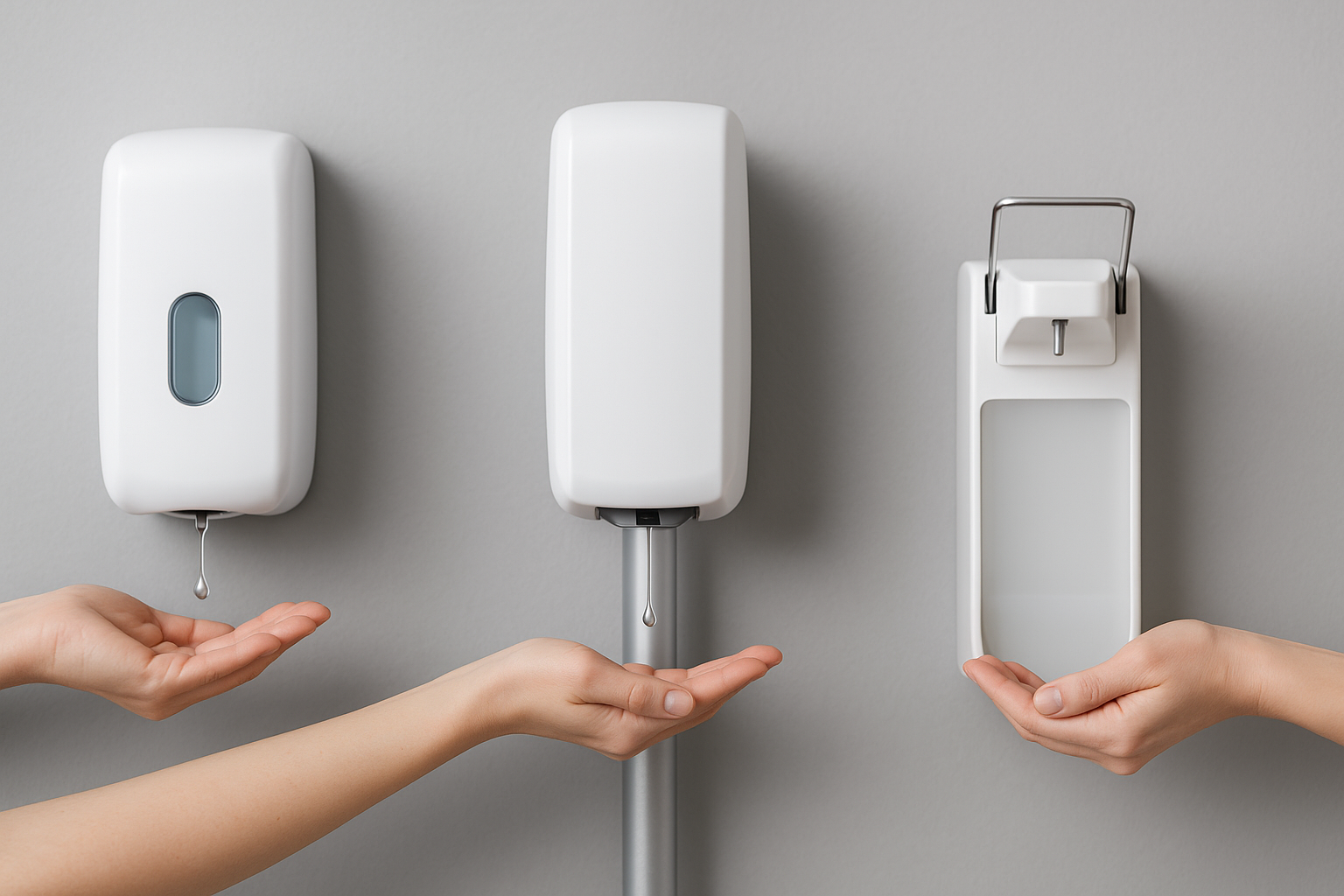
Which Hand Sanitizer Dispenser Should You Choose? Comparing Automatic and Manual Options
Which Hand Sanitizer Dispenser Should You Choose? Comparing Automatic and Manual Options
Personal hygiene is extremely important—especially hand disinfection. Today, hand sanitizer dispensers have become standard fixtures in nearly every public facility, service venue, or institutional space. Their presence is not only expected but often required for maintaining sanitary safety. This raises an important question for business and facility owners: which hand sanitizer dispenser is the best choice for their specific needs? In this article from the Pranie.pl team, we explore different types of dispensers, their pros and cons, and key factors to help you make an informed decision.
Types of Hand Sanitizer Dispensers
The two primary categories of sanitizer dispensers are manual and automatic models. Each has distinct features that may be better suited to different settings, depending on usage and functionality expectations.
Automatic Dispensers
Touchless, motion-activated automatic dispensers have gained popularity for their hygiene benefits. They allow users to sanitize their hands without physical contact, minimizing germ transmission—especially important in high-traffic areas. These dispensers often let you control the amount dispensed, which reduces product waste. They are a preferred choice in large institutions and public spaces due to their efficiency and convenience.
Manual Dispensers
Manual dispensers require direct interaction—typically pressing a button or lever. Many models are designed to be operated with the elbow, helping maintain hygienic practices. Though more traditional, they remain widely used, especially in lower-traffic environments or where precise, larger doses of sanitizer are needed.
What to Consider When Choosing a Dispenser
Capacity:
Think about how often the dispenser will be used and the estimated number of users. For high-traffic areas like malls or large office buildings, larger-capacity dispensers or those that are easy to refill may be more suitable.
Ease of Use and Maintenance:
Regardless of type, a dispenser should be easy to use for visitors and simple to maintain for staff. Accessibility is key to ensuring consistent hygiene compliance.
User Convenience:
Will the dispenser be wall-mounted, freestanding, or portable? Placement and form factor affect how effectively the unit will be used in a given space.
Economic and Environmental Aspects:
More companies are prioritizing sustainability and cost-efficiency. Refillable dispensers are often more economical and environmentally friendly than units with disposable cartridges.
Final Thoughts
There’s no one-size-fits-all solution. The right dispenser depends on your facility’s function, user volume, and your preferences in terms of hygiene, appearance, and practicality. At Pranie.pl, we understand the diverse needs of our clients and offer a wide selection of both automatic and manual hand sanitizer dispensers.
Choosing the right dispenser is not only a step toward better sanitary protection—it’s also a sign that you care for the well-being of your employees and visitors.


