
 English
 Polski
 Deutsch
 Nederlands


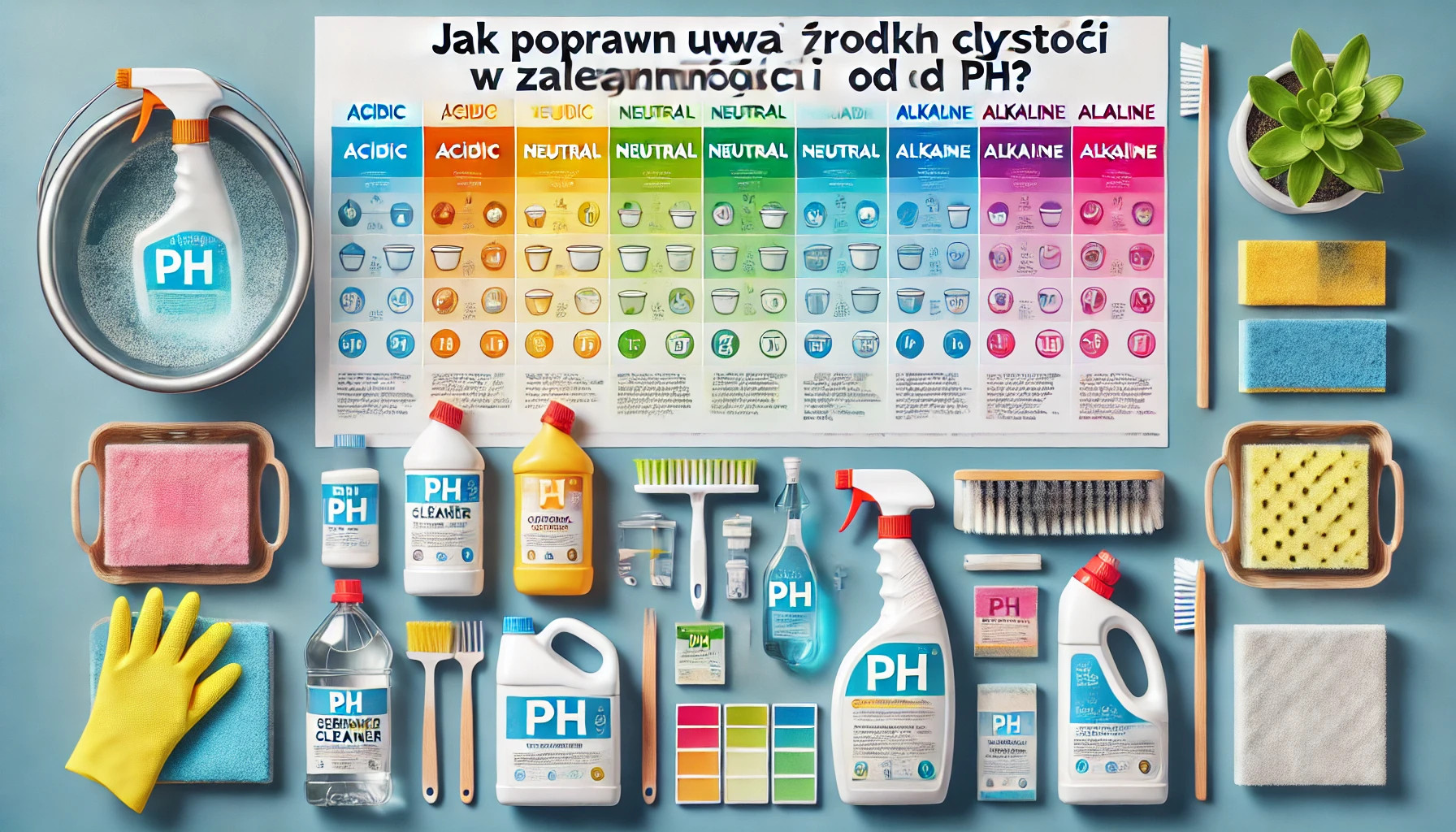
Understanding the pH Scale: How to Choose the Right Cleaning Products for Effective and Safe Cleaning
In today’s world, where cleanliness and hygiene play a key role, it has become increasingly important to understand how to properly use different types of cleaning products. One of the fundamental criteria that affect the effectiveness of cleaning is the pH scale of the products used. In this article, developed with expert support from Pranie.pl, we’ll explore how to properly choose cleaning agents based on their pH level to ensure cleaning is not only effective but also safe for the surfaces being treated.
What is pH?
The pH scale (hydrogen potential) indicates whether a solution is acidic, alkaline, or neutral. It ranges from 0 to 14, with pH 7 being neutral—this is the pH of pure water. Values below 7 indicate acidity, while values above 7 indicate alkalinity. Understanding this scale is crucial when choosing cleaning agents for different types of dirt and surfaces.
Alkaline Cleaners (pH 13–14)
Cleaners with a high pH are effective against greasy and oily dirt. That’s why they are commonly used for cleaning ovens, grills, and other kitchen surfaces. Their alkaline nature helps break down fats, making them easier to remove. However, caution is necessary—they can be harmful to certain surfaces and must be used carefully.
Neutral pH Cleaners (pH 6–8)
These are usually mild detergents, ideal for everyday cleaning and care of surfaces that don’t tolerate extreme pH conditions. Neutral pH products are typically safe for most surfaces and gentle on the user’s hands, making them a popular choice for regular cleaning tasks.
Acidic Cleaners (pH 1–5)
Low-pH cleaners are effective in removing limescale, rust, and other mineral deposits. Their acidic properties make them indispensable for cleaning toilets, tiles, and sanitary facilities. However, special care must be taken when using them on acid-sensitive surfaces.
How to Choose the Right Cleaning Product
The key factor is identifying the type of dirt and the surface you’re cleaning. Not all products are universal, and the wrong choice can not only be ineffective but also damaging. pH information is typically found on the product label, which helps in making the right decision.
The Value of Professional Knowledge
Understanding how pH affects the cleaning process is essential for achieving optimal results. That’s why it’s worth turning to professionals and trusted companies like Pranie.pl, who offer not only specialized products but also expert knowledge on how to use them properly.
Summary
The pH scale is a fundamental indicator that helps determine the most suitable cleaning agents. Whether you’re dealing with grease, limescale, or simply need a gentle cleaner for daily use—understanding and applying pH principles allows for effective cleaning while protecting surfaces. Using cleaning products consciously is not only about aesthetics and hygiene, but also about responsibility for our environment.


