
 English
 Polski
 Deutsch
 Nederlands


What is Room Ozonation and How Does It Work?
Room Ozonation – An Effective Method for Clean Air at Home and in the Office
Contaminated air, unpleasant odors, mold, allergens, and bacteria can pose serious threats to household health. One of the most effective and eco-friendly solutions is ozonation – a modern disinfection method that works both in private homes and public or commercial spaces. Learn how an ozone generator works, where it’s best used, and how to properly prepare your rooms for safe ozonation.
What Is Ozone and How Does It Work?
Ozone (O₃), also known as trioxygen, is an allotrope of oxygen composed of three oxygen atoms. It has a distinctive sharp, fresh smell. Under controlled conditions, ozone acts as a powerful oxidizer that effectively destroys bacteria, viruses, fungi, and other organic pollutants, making it ideal for purifying air, water, and surfaces.
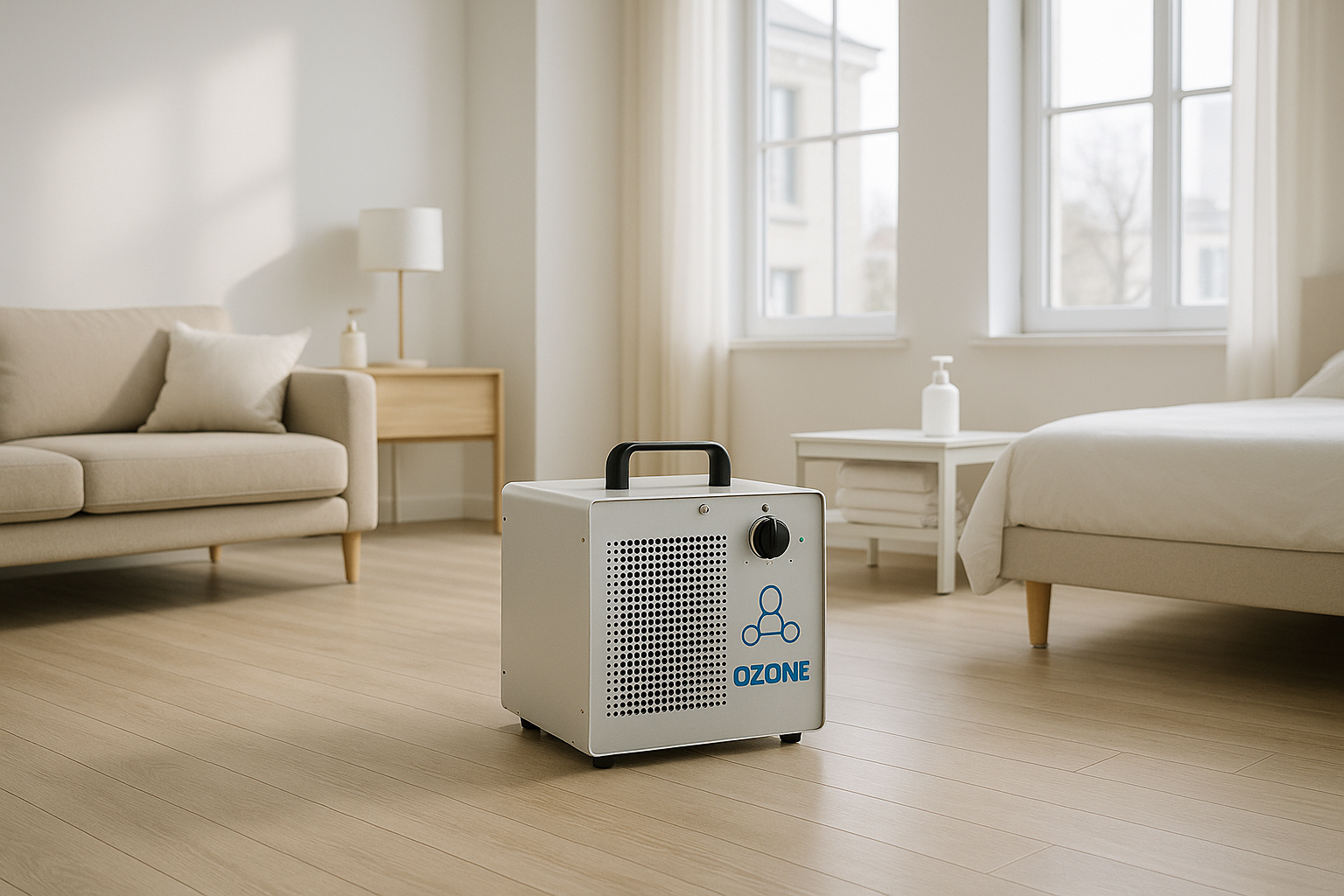
In nature, ozone is found in the stratosphere, forming the ozone layer that protects life on Earth from harmful ultraviolet (UV) radiation. In domestic and industrial settings, it is generated by ozone generators, which convert oxygen into ozone and release it into a closed space.
Is Ozonation Safe?
Yes – as long as it’s performed according to safety guidelines. High ozone concentrations can be toxic, so the process must be conducted by a trained individual wearing proper protective gear (mask, goggles, suit). For home use, ozone generators should include a deozonation module, which converts residual ozone back into oxygen after the process.
After ozonation, the room must be well ventilated. Ozone naturally breaks down within about two hours, making the air safe again without additional interventions.
Why Is Ozonation Performed?
Ozonation is used for:
Disinfecting air and surfaces
Removing unpleasant odors (e.g., smoke, fire, mold)
Eliminating allergens and fungi
Destroying bacteria and viruses in high-traffic areas
It's a cost-effective and efficient solution used in homes, apartments, vehicles, offices, hotels, schools, kindergartens, and medical facilities.
Where Should You Use Ozonation?
Ozonation is especially recommended in:
Residential spaces – bedrooms, living rooms, kitchens, and bathrooms
Educational facilities – daycares, kindergartens, schools
Offices and meeting rooms – for bacteria and odor control
Hotels, vacation rentals – to ensure hygiene and freshness
Basements, attics, storage rooms – to combat mold spores and stale air
Animal shelters and breeding spaces – to improve environmental health
In households with allergy sufferers, combining ozonation with regular bedding washing and HEPA vacuuming significantly enhances air quality and comfort.
How to Prepare a Room for Ozonation?
To ensure effectiveness and safety:
Remove plants, animals, and food from the area.
Close all windows and doors, open closets and cabinets to allow ozone to circulate inside.
Move furniture away from the walls to expose more surfaces.
Clean the room thoroughly – remove trash, vacuum, wipe spills.
Wear protective gear, place the ozone generator centrally, and leave the space.
After the process, wait at least 2 hours, then ventilate the room thoroughly to remove residual ozone.
Summary
Ozonation is a safe, eco-conscious, and highly effective method of disinfection that’s gaining popularity in homes and public spaces alike. With ozone generators equipped with a deozonation function, the process is both powerful and user-friendly. Routine ozonation promotes cleaner, fresher, and healthier indoor air.
At pranie.pl, we encourage proactive care for indoor air quality — for better health, comfort, and peace of mind in everyday life.


