
 English
 Polski
 Deutsch
 Nederlands


Clogged Drain? Discover the Best Ways to Keep Your Pipes Flowing Freely at Home
How to Effectively Deal with a Clogged Drain? Proven Pipe Unclogging Methods
Clogged drains are a common issue that can seriously disrupt daily life in the kitchen or bathroom. Blocked pipes are often caused by a buildup of food scraps, hair, grease, or soap, which not only slows down water flow but can also produce unpleasant odors. In this article, we present tried-and-tested, safe methods for effectively clearing drains—both at home and with professional help.
1. Natural Drain Cleaning Methods
Home remedies are often the first line of defense against pipe blockages. One of the simplest methods is to use hot water—boiled and carefully poured down the drain—to dissolve grease and residue.
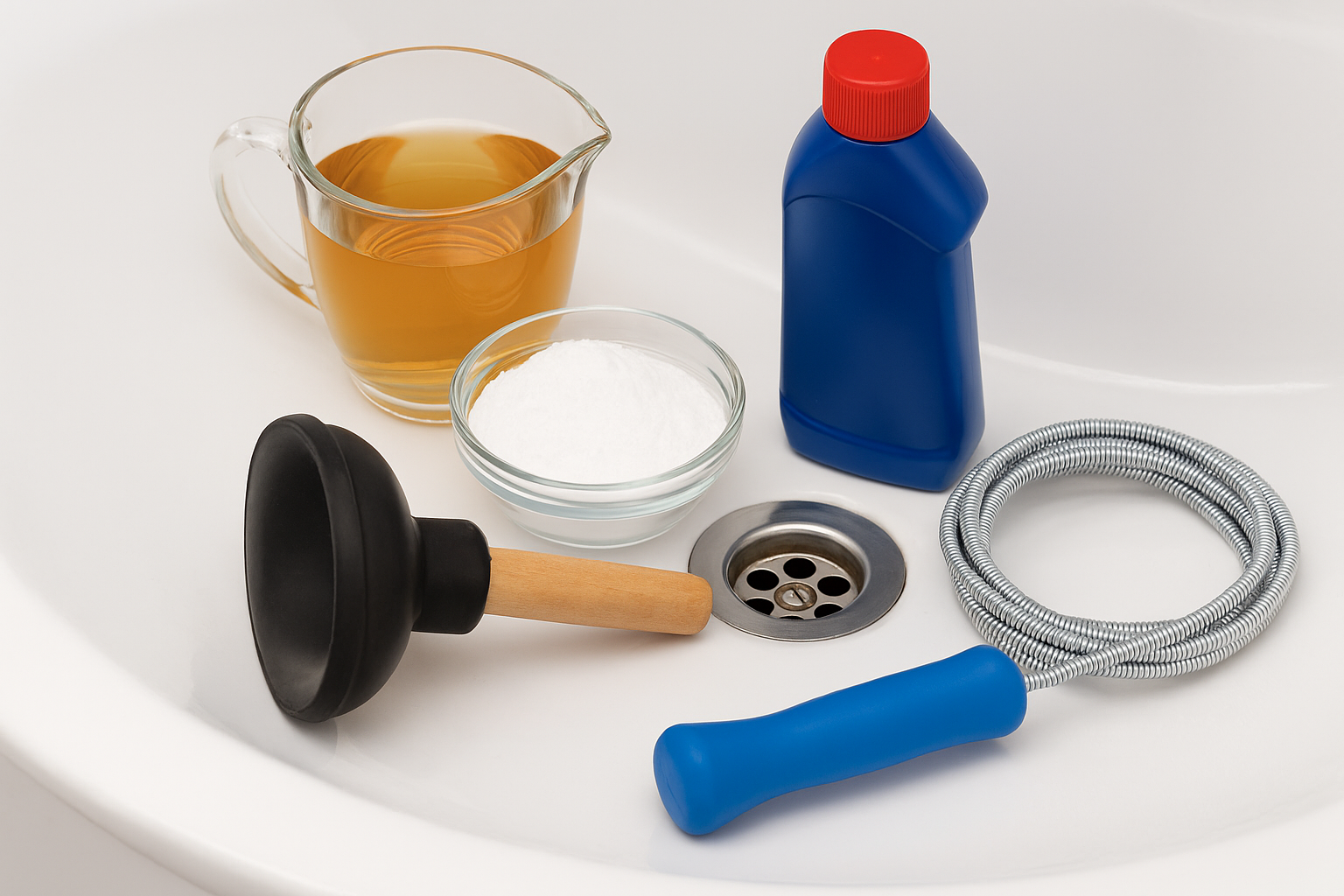
Another popular and eco-friendly option is a mix of baking soda and white vinegar. Simply pour half a cup of baking soda into the drain followed by one cup of vinegar. Wait a few minutes and then flush the drain with hot water. This chemical reaction helps break down organic debris effectively.
2. Mechanical Pipe Cleaning
If home methods don’t work, mechanical solutions may help. A drain snake (also called a plumbing auger) allows you to manually remove deeper clogs from the pipe. Its rotating motion helps dislodge and extract hair or food remnants.
For minor blockages, a traditional rubber plunger may do the trick—creating pressure in the pipe to push the obstruction further down the system.
3. Chemical Drain Cleaners
There are many commercial chemical products designed specifically for unclogging pipes. These active formulas effectively dissolve grease, hair, and soap residue. It’s best to use reputable brands and always follow safety instructions.
Before use, make sure the product is suitable for your type of plumbing—incorrect chemicals can damage pipes. Always apply chemical cleaners in well-ventilated areas and strictly according to the manufacturer’s guidelines.
4. Trap (P-Trap) Cleaning – A Preventive Must
The P-trap is the part of the plumbing system that most frequently gets clogged. It tends to collect grease, hair, food particles, and soap scum. Manually cleaning the trap regularly helps prevent major issues with drainage.
If dismantling the trap isn’t an option, you can use chemical cleaners or mechanical methods to maintain flow without removing the fixture.
5. When to Call a Professional
If none of the above methods work, it may be time to contact a professional. Plumbing experts use advanced tools such as inspection cameras, high-pressure water jets, and hydrodynamic drain cleaners to safely and effectively remove even the toughest clogs.
A professional diagnosis can also reveal hidden issues like cracked pipes or installation errors in your drainage system.
How to Prevent Future Drain Problems
Prevention is always better than cure. Avoid pouring food scraps or grease down the drain—use a sink strainer to catch larger particles. Rinse your pipes regularly with hot water and use mild cleaners to maintain flow.
Taking care of your drainage system is not only convenient but also saves time and money in the long run.


