
 English
 Polski
 Deutsch
 Nederlands


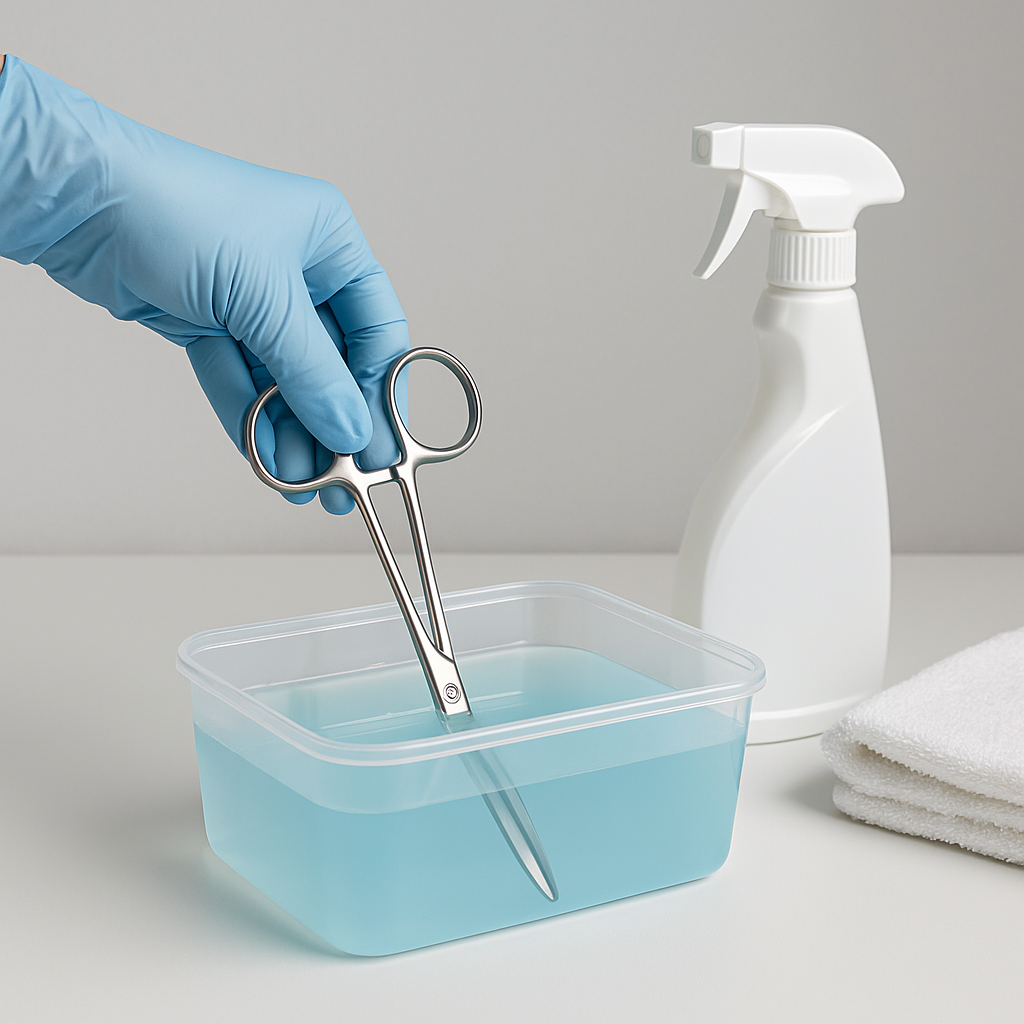
Manual Instrument Disinfection – What Factors Affect Its Effectiveness?
What Is Manual Disinfection and Why Does It Matter?
Manual disinfection is the first stage in the decontamination process of medical instruments. It plays a crucial role in removing pathogens and biofilm, ensuring that high-level disinfection and sterilization are effective. Mistakes at this step can compromise the entire process and put patients at risk.
Key Factors That Influence Effectiveness
Disinfectant type, concentration, and exposure time
Only disinfectants tested under "dirty conditions" and used according to the manufacturer’s instructions (concentration, temperature, time) can guarantee proper antimicrobial action.Water quality and complete solution preparation
Use clean water and ensure the powder or concentrate is fully dissolved. Any sediment or uneven mixing can reduce the disinfectant’s performance.Cleanliness and freshness of the working solution
The solution should be replaced daily – especially if it becomes cloudy or contaminated. Visible dirt significantly reduces its disinfecting power.Full immersion and dismantling of instruments
Every part of each instrument must be fully immersed and disassembled to allow proper contact. Air pockets or closed channels block access to active agents.Condition of the instruments
Instruments must be undamaged and free from cracks or visible debris. Only clean and intact items can be reliably disinfected.
What Do Global Guidelines Say?
According to the CDC, residues such as salts and organic matter can shield microorganisms, reducing disinfection efficacy. Without thorough pre-cleaning, even effective chemicals may fail.
AORN guidelines recommend ergonomic workstations, adequate lighting, personal protective equipment, and staff training – all of which help reduce errors and injuries during manual high-level disinfection (HLD).
Summary – Practical Recommendations
| Step | Best Practice |
|---|---|
| 1 | Use verified disinfectants (tested under “dirty” conditions) |
| 2 | Prepare the solution correctly – concentration, temperature, time |
| 3 | Replace the solution daily, monitor clarity and color |
| 4 | Disassemble instruments and ensure all parts are fully immersed |
| 5 | Conduct visual inspection of instruments before and after |
Manual disinfection is not just rinsing tools – it’s a controlled process that directly affects sterilization outcomes and patient safety. It requires precision, training, and consistent monitoring to deliver optimal results.

