
 English
 Polski
 Deutsch
 Nederlands


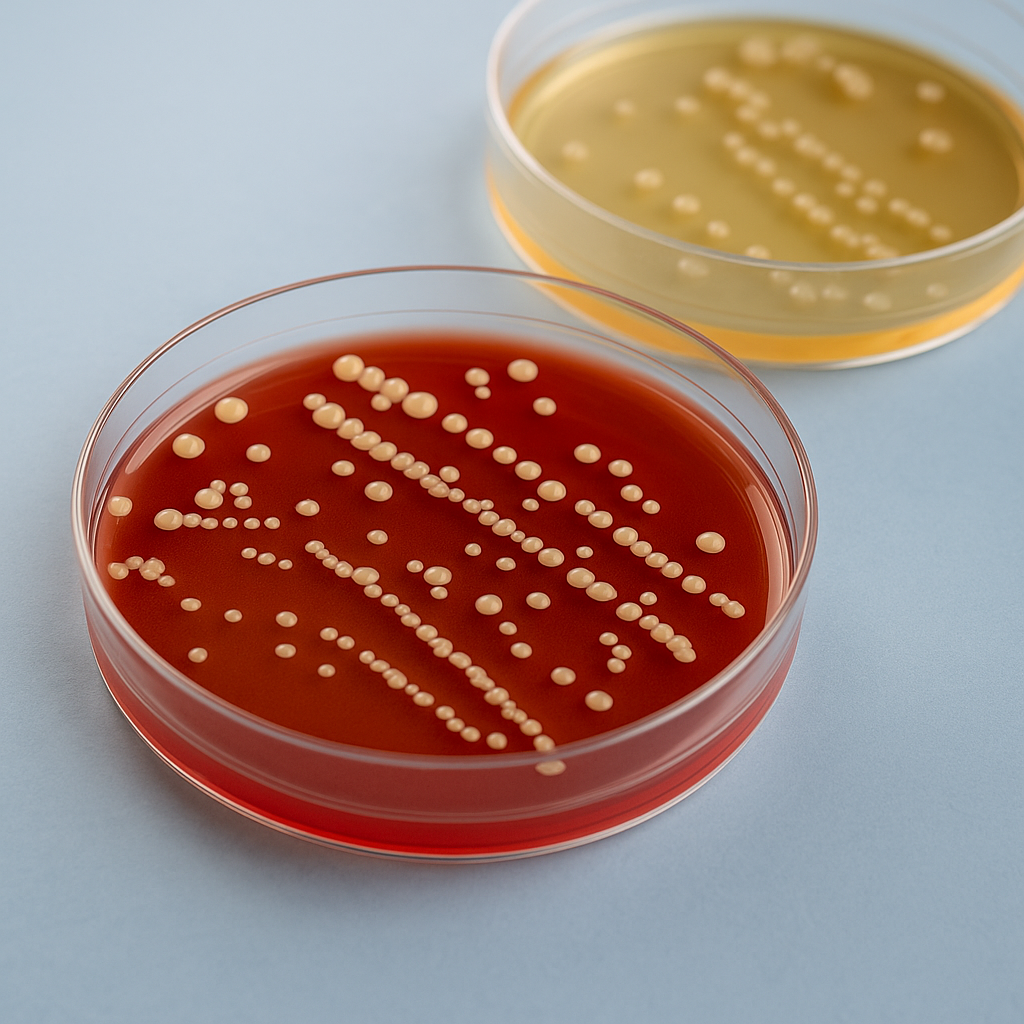
Bacterial Spores Under Scrutiny – Why Use B. subtilis and B. cereus in Testing?
What Are Spores and Why Are They So Important?
Spores are a hardened form of bacteria that are highly resistant to external factors such as heat, drying, UV radiation, and chemicals. They are used as a standard benchmark in disinfection testing to measure how effective a product is at killing the most persistent microorganisms.
Why Exactly B. subtilis and B. cereus?
B. subtilis –
• Produces some of the most resilient spores in nature.
• Well-studied and standardized in European testing protocols like EN 17126 and EN 13704.B. cereus –
• Its spores closely resemble those of B. anthracis (anthrax), making it a relevant test organism.
• Helps assess disinfectant performance against a broad range of spore-forming bacteria.
The selection of these strains balances representativeness, resistance, and lab safety, ensuring reliable testing without introducing unnecessary risk.
Spores in Practice – What Do the Standards Say?
The EN 17126 standard (for high-level disinfection in medical settings) requires products to be sporicidal against both B. subtilis and B. cereus. Similarly, EN 13704 and EN 14347 use these spores in dirty condition testing – simulating real-world hospital environments.
What Does This Mean for You?
Choosing proven-effective products – Certifications showing efficacy against these spores provide real assurance.
Credible disinfection claims – These tests go beyond basic bactericidal performance and reflect real-world challenges.
Protection for patients and staff – Sporicidal action is critical in defending against hard-to-kill pathogens, often responsible for healthcare-associated infections.
In Summary
Using B. subtilis and B. cereus spores in testing is no coincidence – it's the result of years of scientific evidence. These organisms form the foundation of reliable sporicidal testing, ensuring that disinfectants used in practice truly deliver under pressure.


